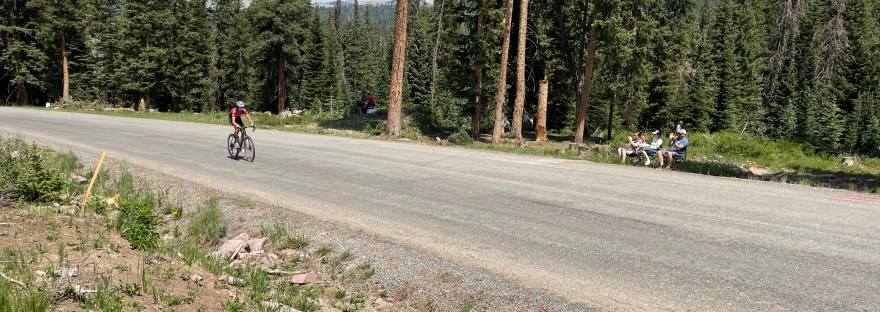
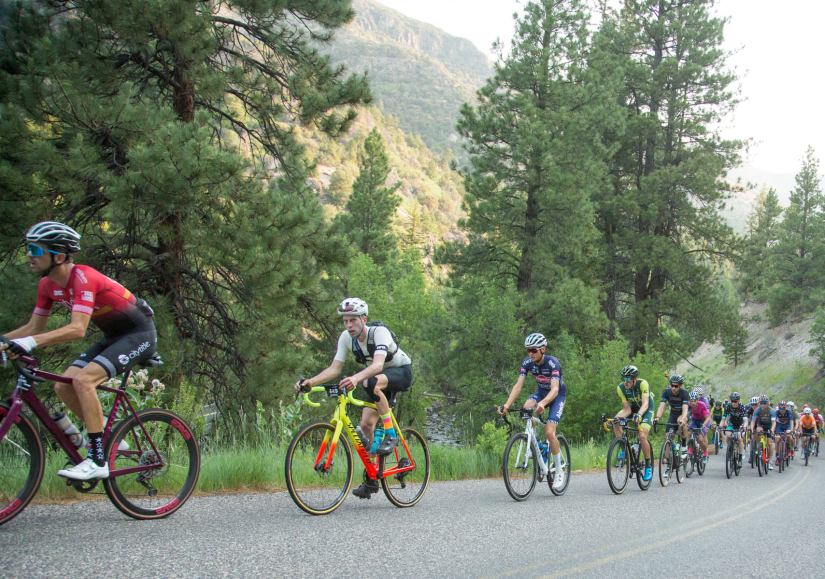
One of the events I was most disappointed to miss out on last year when the coronavirus shut everything down was the Crusher in the Tushar, a major gravel race in Utah that begins in Beaver, the birthplace of Butch Cassidy, and finishes with a climb to over 10,000 feet above sea level. The 69-mile course features 27 miles of pavement, and 42 miles of gravel that is typically smooth, especially compared to what I am used to in Northwest Arkansas. The worst section of the course this year, was the big descent, which had some extreme washboarding coming into most of the corners, and some fresh, loose gravel as well. The 10,000 feet of elevation gain on this route fits my riding style well and made it the perfect race for me to choose as my first major gravel event. The beautiful scenery along the course was I nice bonus.
The drama started a week before the race when I noticed a big crack in the top tube of my gravel bike. I scrambled to find a bike to use for the weekend and Kevin Girkins was able to hook me up with an Allied Able. Becca and I had decided to make a vacation out of the trip, so we spent the week before the race traveling through Colorado and Utah. I got to get in some awesome rides at Colorado National Monument and the Old Fall River Road in Rocky Mountain National Park. I highly recommend riding Old Fall River Road if you have the chance; yes, you’ll be climbing for an hour or more, but the views are incredible. We also got to do some hiking in Arches and Zion. I was also able to recon the entire course over a couple days early in the week and make sure everything about the bike setup was dialed in properly. With the high percentage of paved roads and the relatively smooth gravel, the 38mm Specialized Pathfinder Pro was the perfect tire for the race.
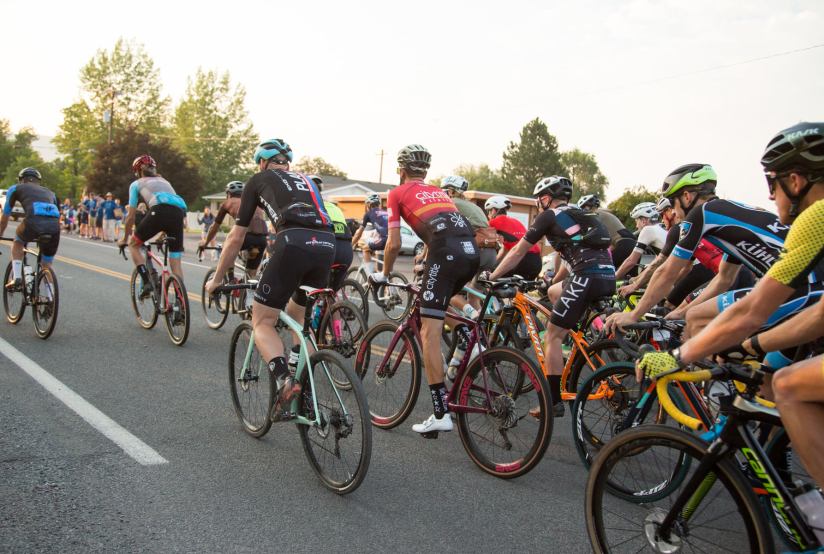
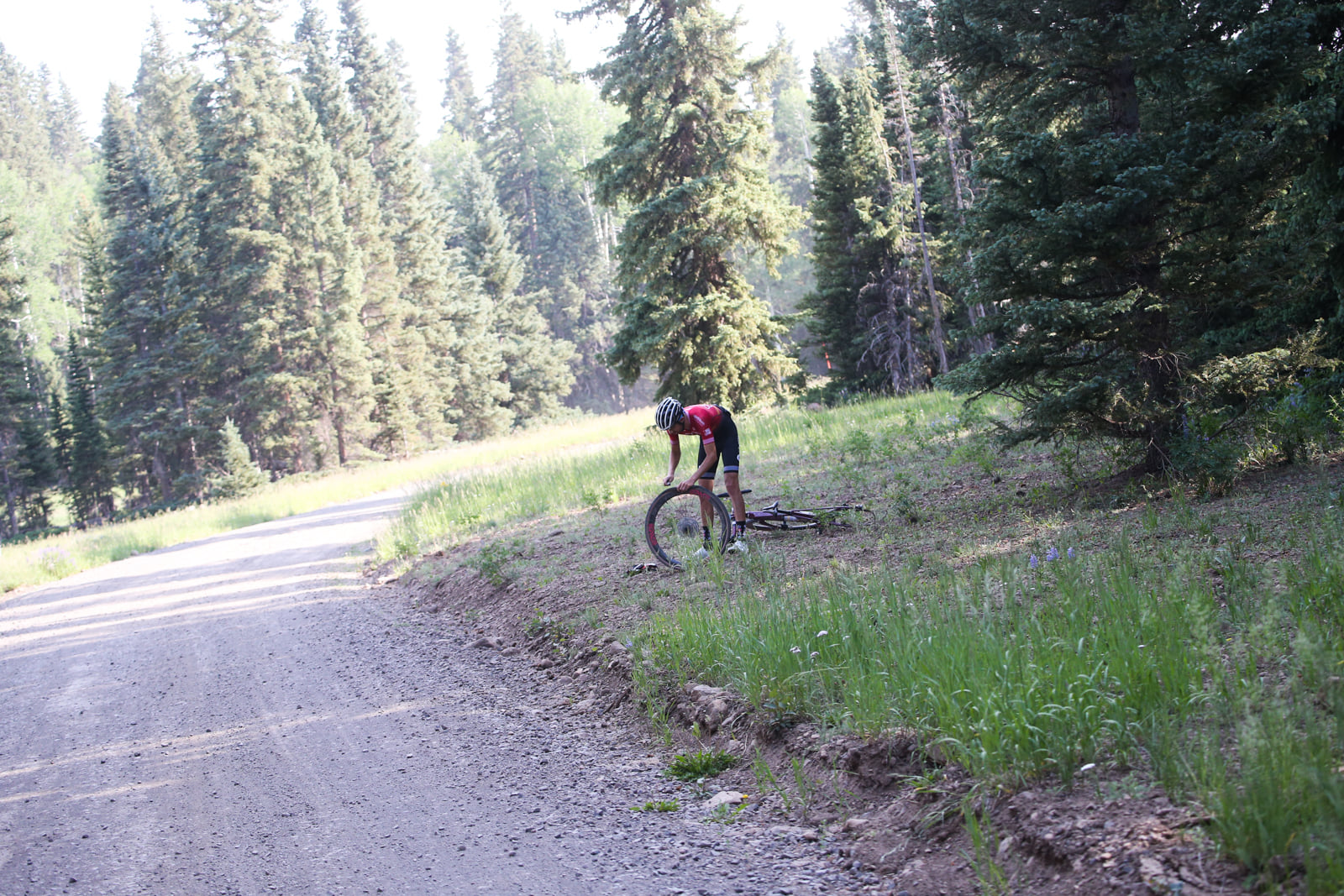
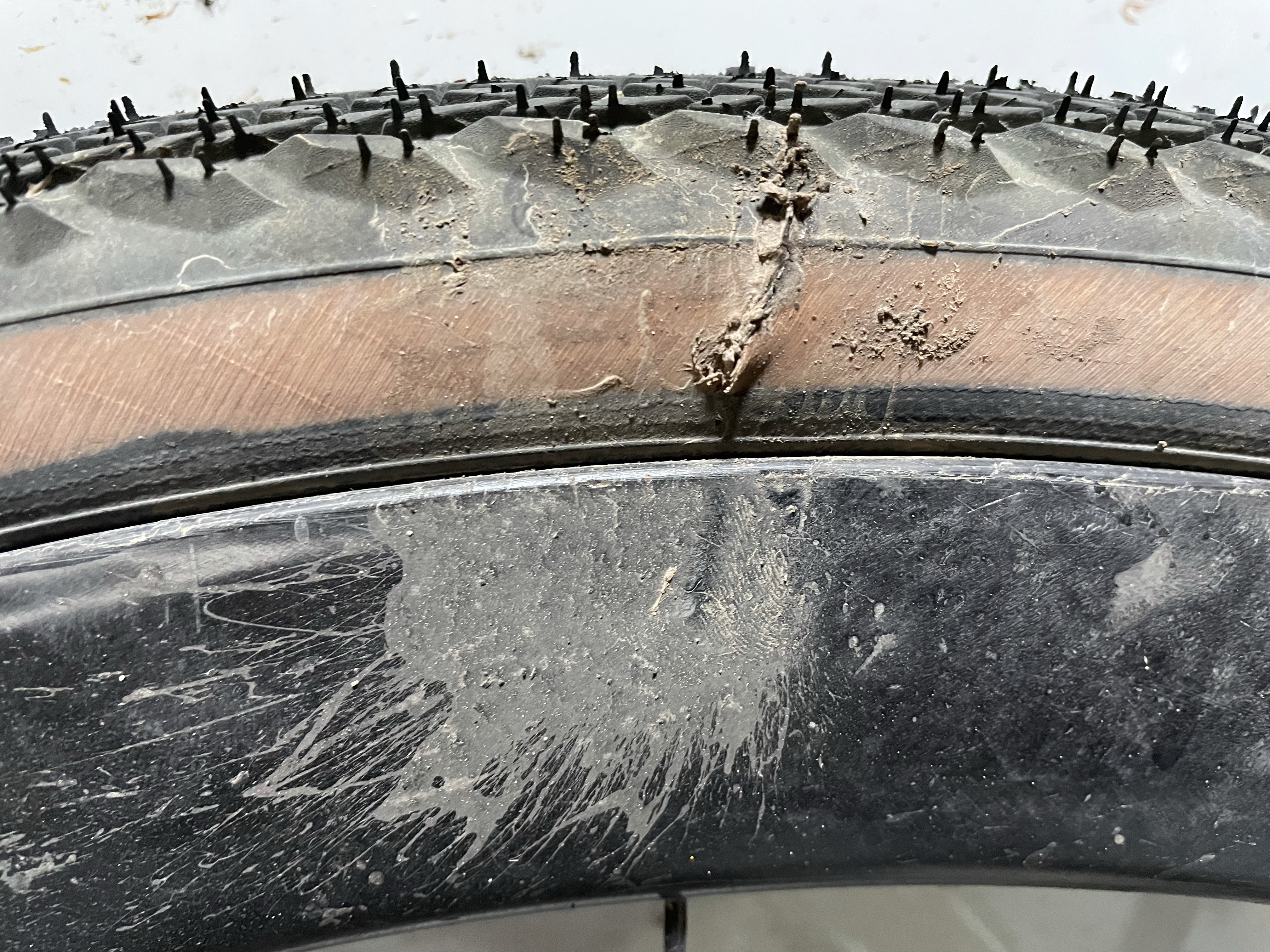
The race started peacefully as the first 10 miles are up a slight incline on a paved highway. With temperatures in the mid 60s for the 7 a.m. start, I was pretty chilly at first, but that wouldn’t last long with high temperatures in valley forecast to be over 100 degrees. At mile 10 we turned off the highway, hit the gravel, and started climbing. I wanted to stay with the front group, but they hit this section harder than I was willing to go this early in the race. I wanted to race conservatively early on to save my energy for the brutal Col du Crush climb in the second half of the course. I made it to the top of the first climb in around 25th place, and after an hour and 45 minutes of riding uphill we finally got to coast downhill. This first downhill is where disaster struck for me, as I managed to find one of the very few sharp rocks on the course and got a puncture. I had a big cut in the sidewall and sealant was not going to hold it. Eventually I was able to get a tube in and get back on my way, but over 100 riders had passed me while I was fixing my flat. A few minutes later I made my next mistake as I blew right past the aid station before the long switchback descent to the valley on the other side of the course. I had plenty of water so I figured I would stop at the next one.
The descent of the Col du Crush was all about survival. The loose gravel made the switchbacks treacherous, and the washboarded gravel certainly didn’t help with control of the bike. Fortunately, it looked like most of the riders were taking the descent carefully, as a few seconds gained on this downhill weren’t going to make a difference with two hours of climbing still to come. The last 5 miles of the descent were on pavement, and this is where the smooth center strip of the Pathfinder tires really came in handy. I was able to get into the super tuck and catch up to several riders to form a nice little group as we reached the valley and the aid station. This is where I realized my mistake as I stopped to fill up my bottles and the other riders carried on. The next 9 miles were on a flat highway, the only part of the course where you really needed to be in a group to get the benefit of the draft. I filled my bottles as quickly as possible and sprinted to rejoin the group.
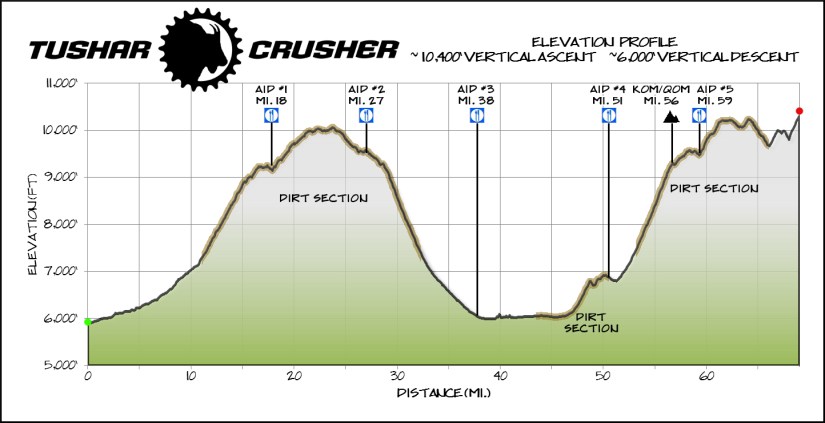
Over the next 20 minutes we continued to catch other slower groups in front of us, but eventually the cooperation ceased and the speed dropped to a point that I was better off to go on alone. Mile 46 is where the real fun begins. By distance, you’re two-thirds done, but in reality you’re barely past the halfway point. It started with a section known as the “sarlacc pit” which is 4 miles of a 4% grade on a road that is more sand than gravel or dirt. Then you have the almost hour long climb of the Col du Crush before an up and down road to the final pitch to the finish line. After the long descent and then rolling in the group on the flat roads, the legs were feeling pretty good. I knew I was a long way back from where I should’ve been thanks to the flat tire, and as we hit the dirt again I immediately began passing riders. The sarlacc pit section of the course isn’t too tough on it’s own, but when you think about what is still to come afterwards, you have to measure your efforts carefully. I was able to build a pretty good rhythm, and constantly having riders to chase after and pass was helpful mentally. By the time I had reached the aid station at the base of the Col du Crush, I had probably caught at least two thirds of the riders who had passed me while I was repairing my tire.
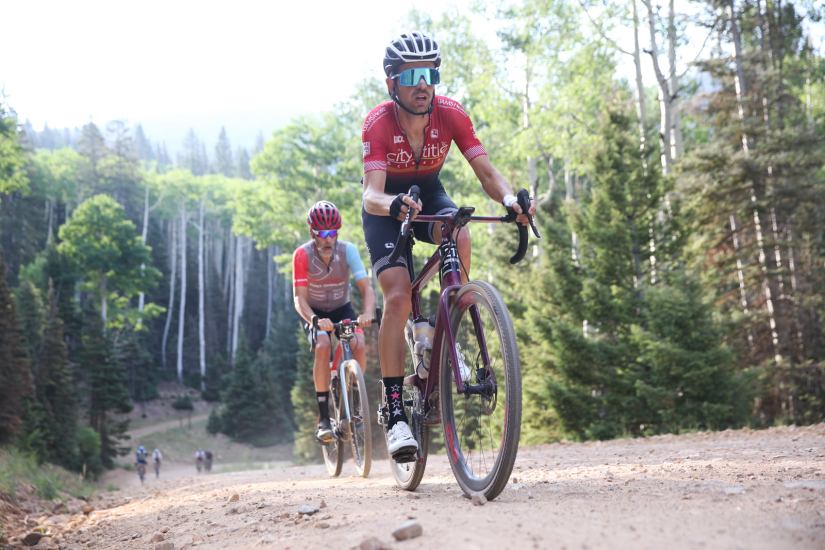
After a quick fill of the bottles, I was onto the climb. I set off at what I believed to be a sustainable pace and continued to quickly pass more riders. After a third of the climb, I realized I had more in me than I thought, and I increased the pace a little bit. Toward the top of the climb it started to get a little lonelier; I was getting closer to the front of the race where the riders were more spread out and their speeds were similar to mine. ON the final switchback of the climb there was an aid station they were spraying down riders with water and handing out ice socks; this was welcome relief after climbing for nearly an hour with temperatures hovering around 100 degrees. I crested the top of the climb in around 40th place, having done the 11th fastest time up the KOM.
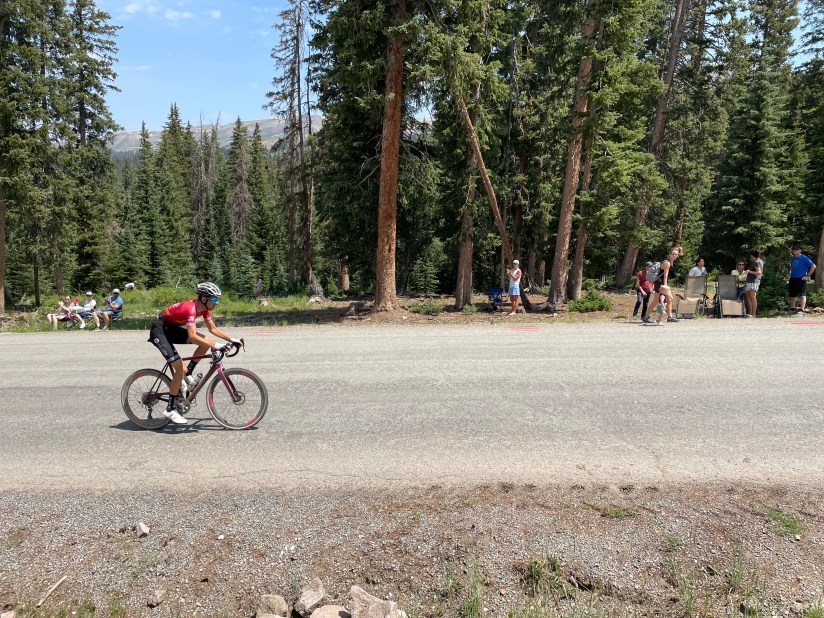
After quickly consuming a Coke at the final aid station I faced 10 more miles and about 1000 more feet of climbing to reach the finish. I was starting to feel the effects of the day not just in my legs, but also my feet, arms, and back. Well out of contention for a high finish and without any riders in sight ahead of or behind me I settled into an easier pace for this final bit. At one point a pair of riders came flying past me on a flat stretch of road. I tried to hop onto their wheel but just couldn’t bring myself to ride that hard. I passed them on the next hill when they were both cramping so badly they had to get off their bike. After one final gravel descent I was back on pavement for good. After nearly 5 hours of suffering, the final test was a 1-mile 8.5% grade climb to the finish line. I took it at a comfortable, but respectable pace without any chance of catching or being caught by other riders. As I reached the final few hundred meters I was able to put in a little bit of a sprint toward the line for show, as the crowd that had gathered rang cowbells and cheered me on. After 5 hours and 13 minutes I had reached the finish line in 44th place.
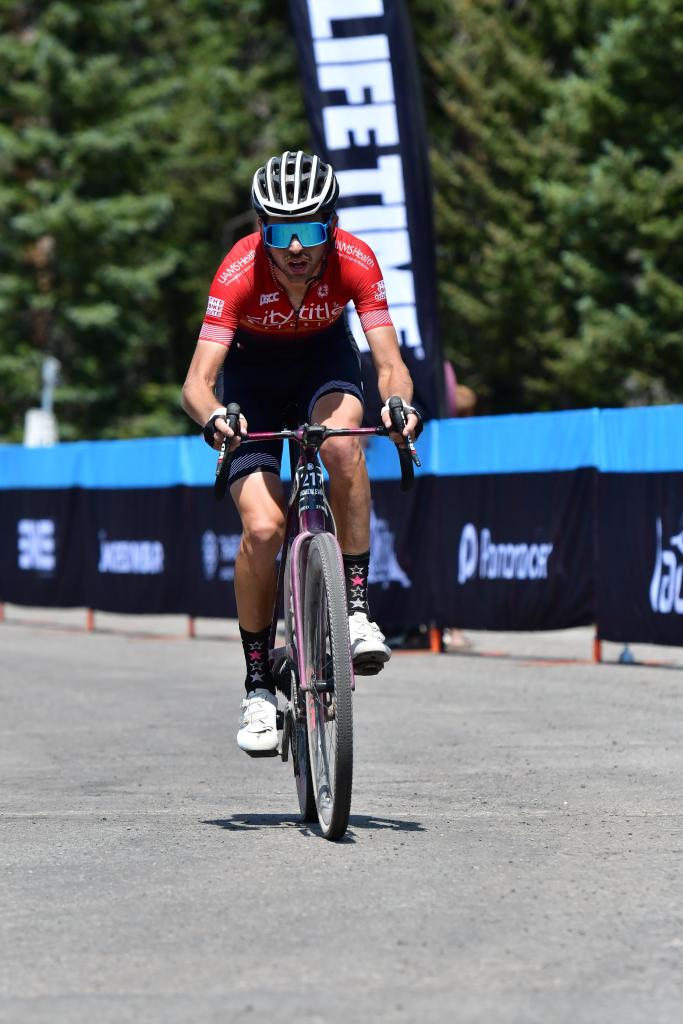
Overall, I was pretty pleased with how the race went. Of course, I would’ve liked to finish higher and avoided the flat tire, but the main goal of this as my first big gravel race was to have more of a learning experience. I can come away having learned lessons in aid station strategies and that I need to work on how fast I can repair a flat tire. I’ll also be happy that I was one of the fastest up the Col du Crush that day and that I was able to pass nearly 100 riders within the two hours after my setback. This was certainly an event that I plan to return to in the future, where I’ll, hopefully, be better prepared to contend for a top spot.

 Andrew Evans